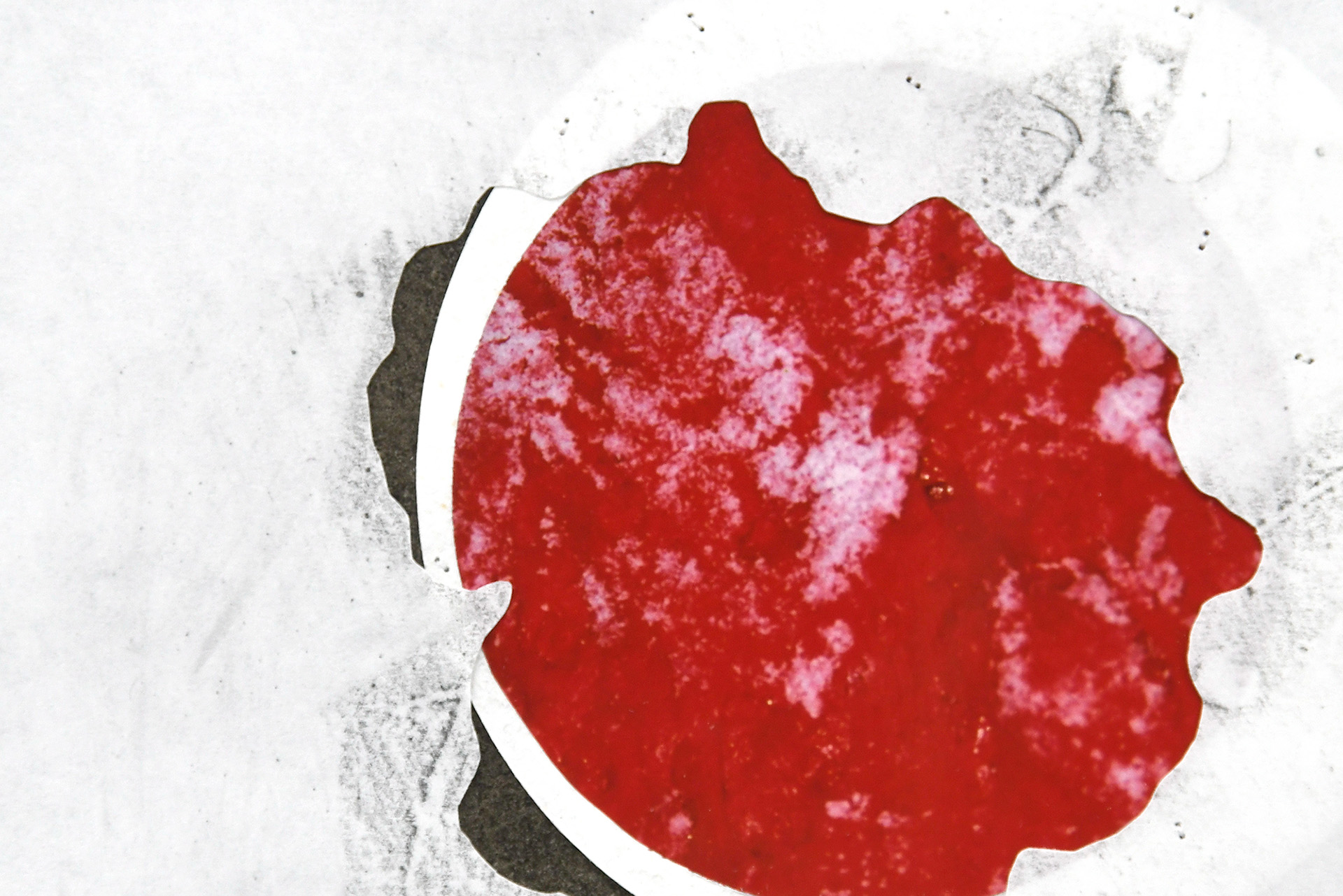
fingers in a red state but not yet bleeding

Guðný Rósa Ingimarsdóttir
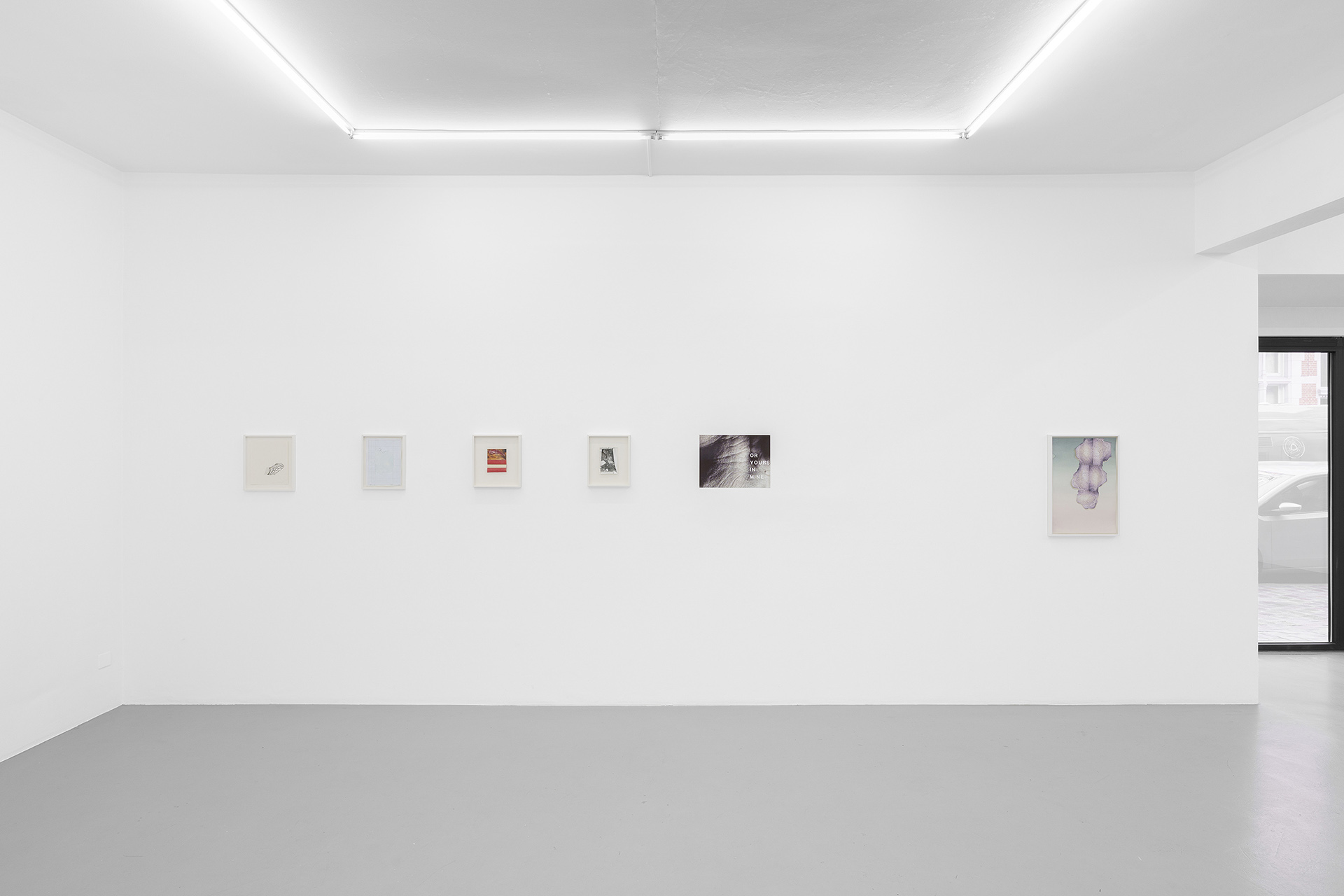
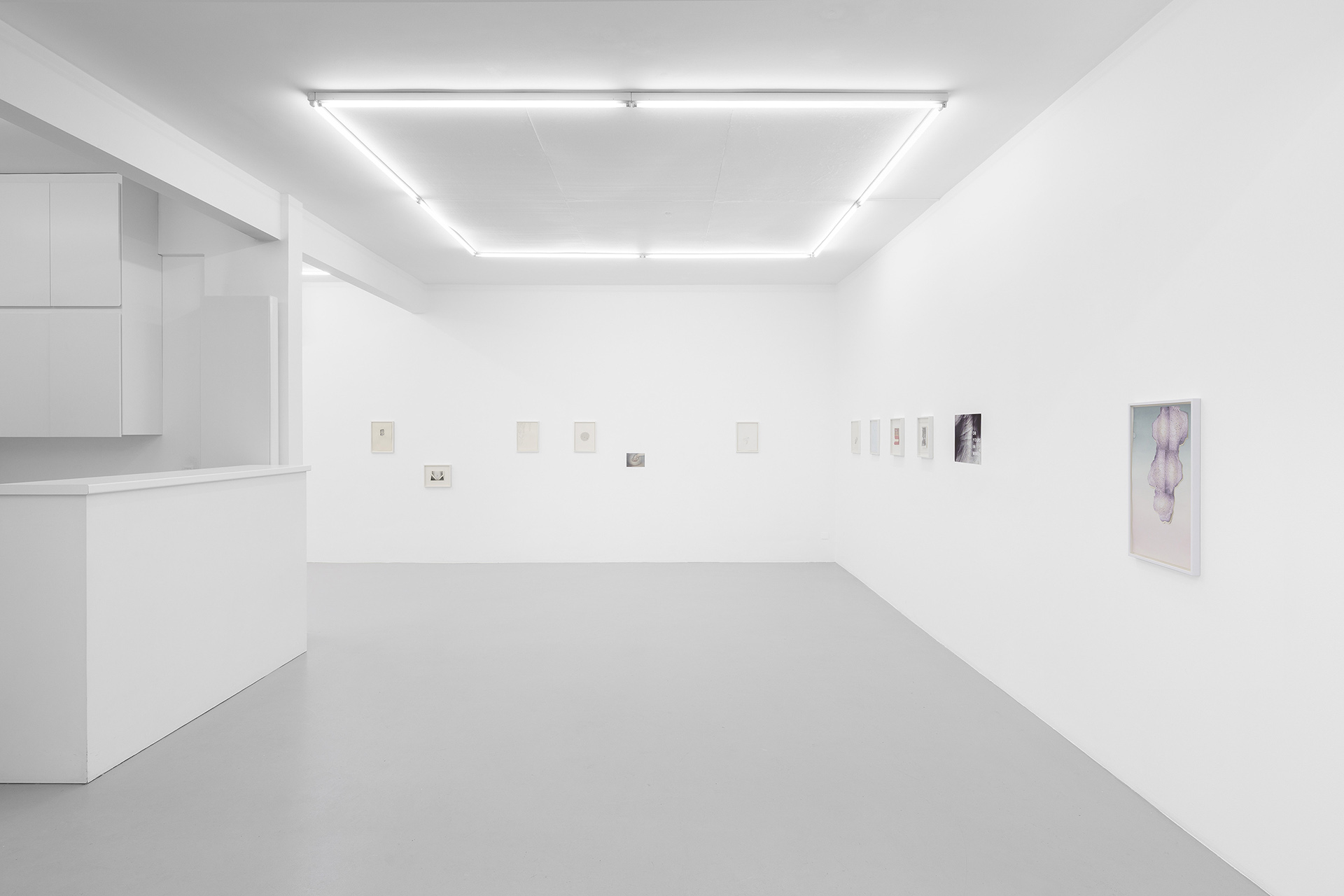
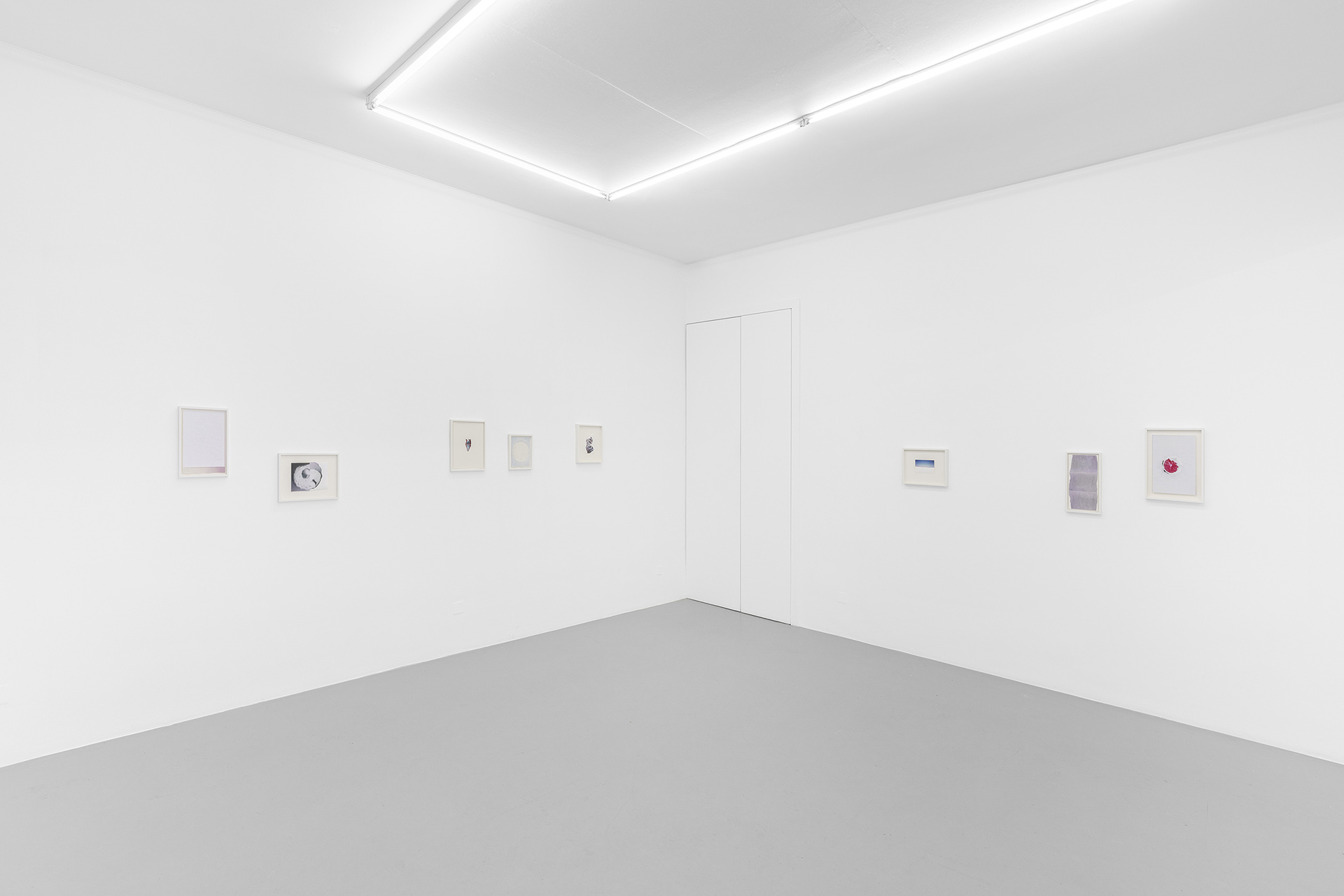
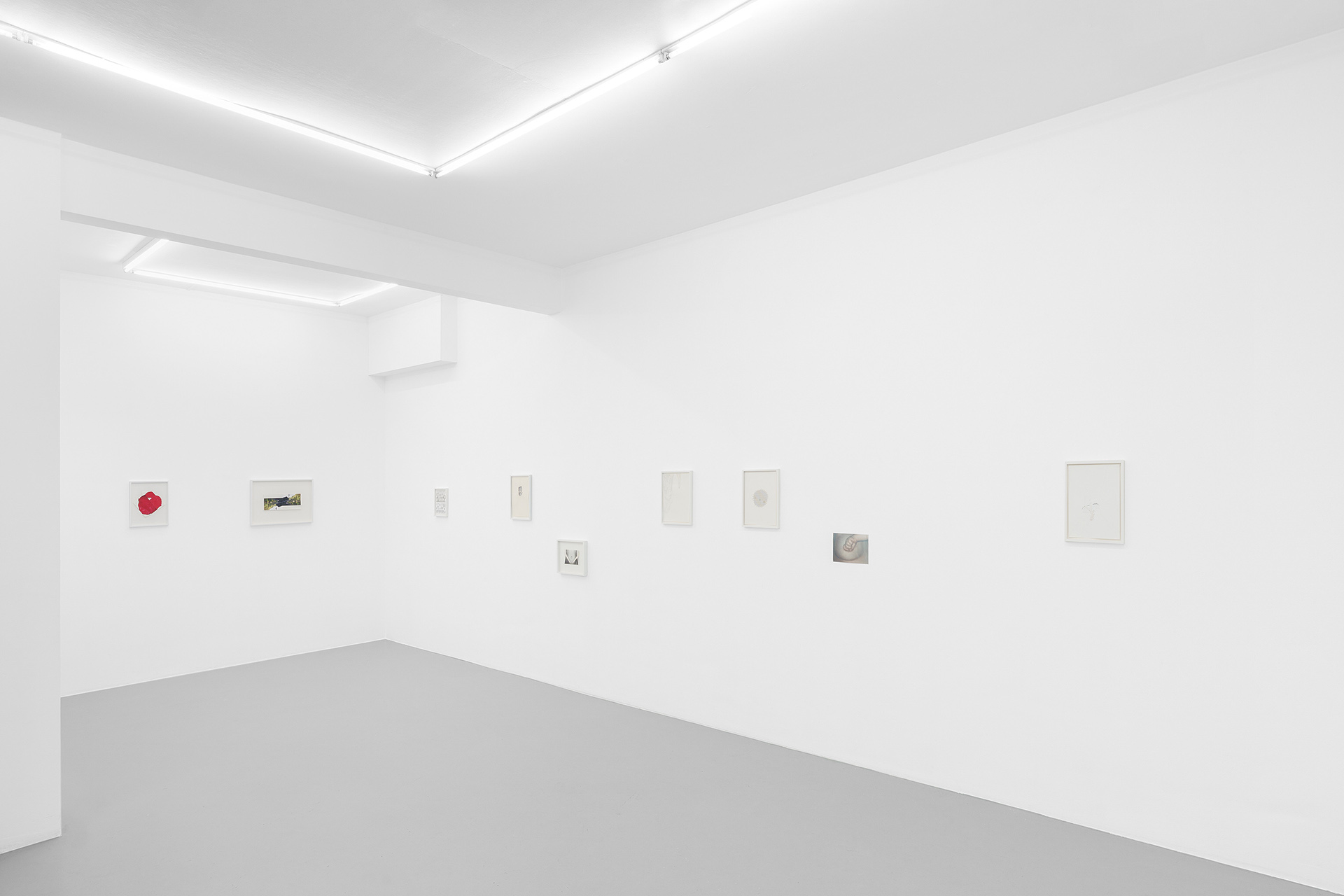
Guðný Rósa Ingimarsdóttir’s artistic practice could be compared to a spider web inasmuch as it is born out of an infinite amount of delicate and often mysterious connections that endlessly reconfigure themselves in different contexts and exhibition venues. Thus, with each new presentation, her body of work appears renewed, both in its forms and in its very materiality. Nothing is ever fixed in a clearly defined temporality: the artist’s creations transform and shift according to a logic of open and evolving interrelationships, reflecting her way of being in the world. This neutering instability, which is integral to her creative process, is particularly evident in her relationship with the photographic image. Photosensitive surfaces have long been slipping into the interstices of her paper compositions, appearing in different places as if to better inhabit the space offered to them. Initially discreet, this presence has gradually asserted itself over the years, to the point where it has now become a structural element in many of her recent works, to the extent that the artist herself evokes a shift in her practice, where drawing seems to be slowly giving way to the printed image, without however disappearing completely from the visual field.
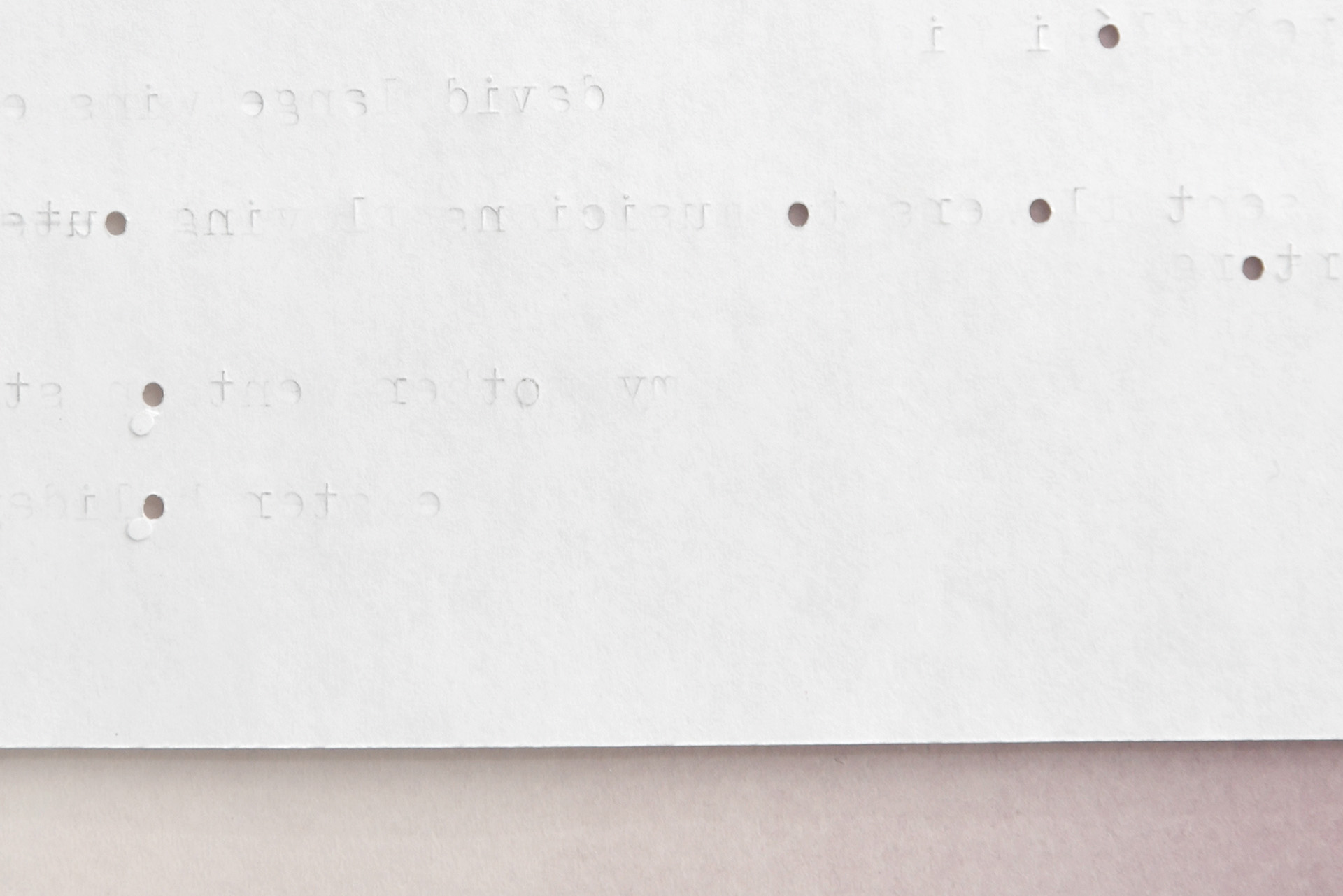
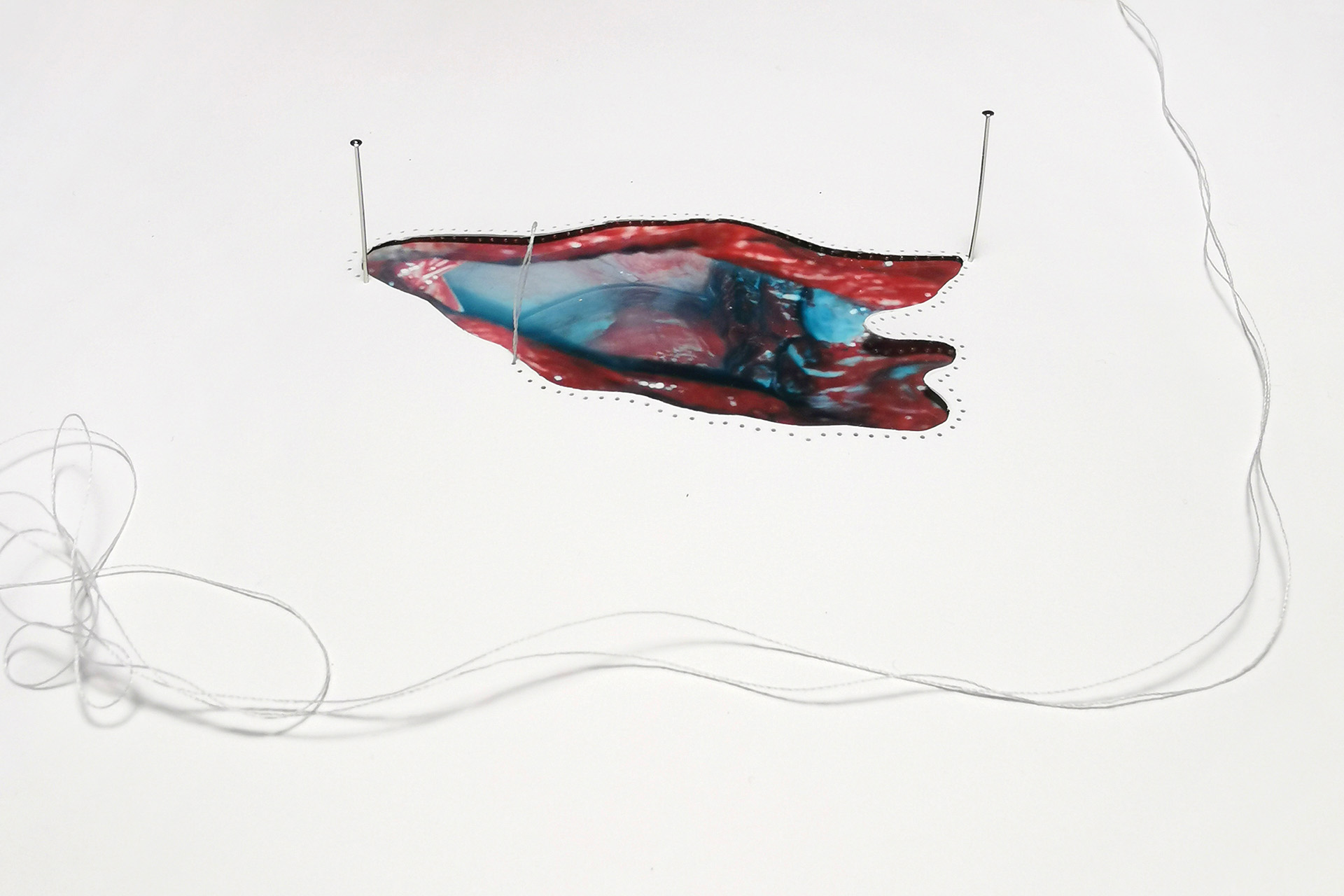
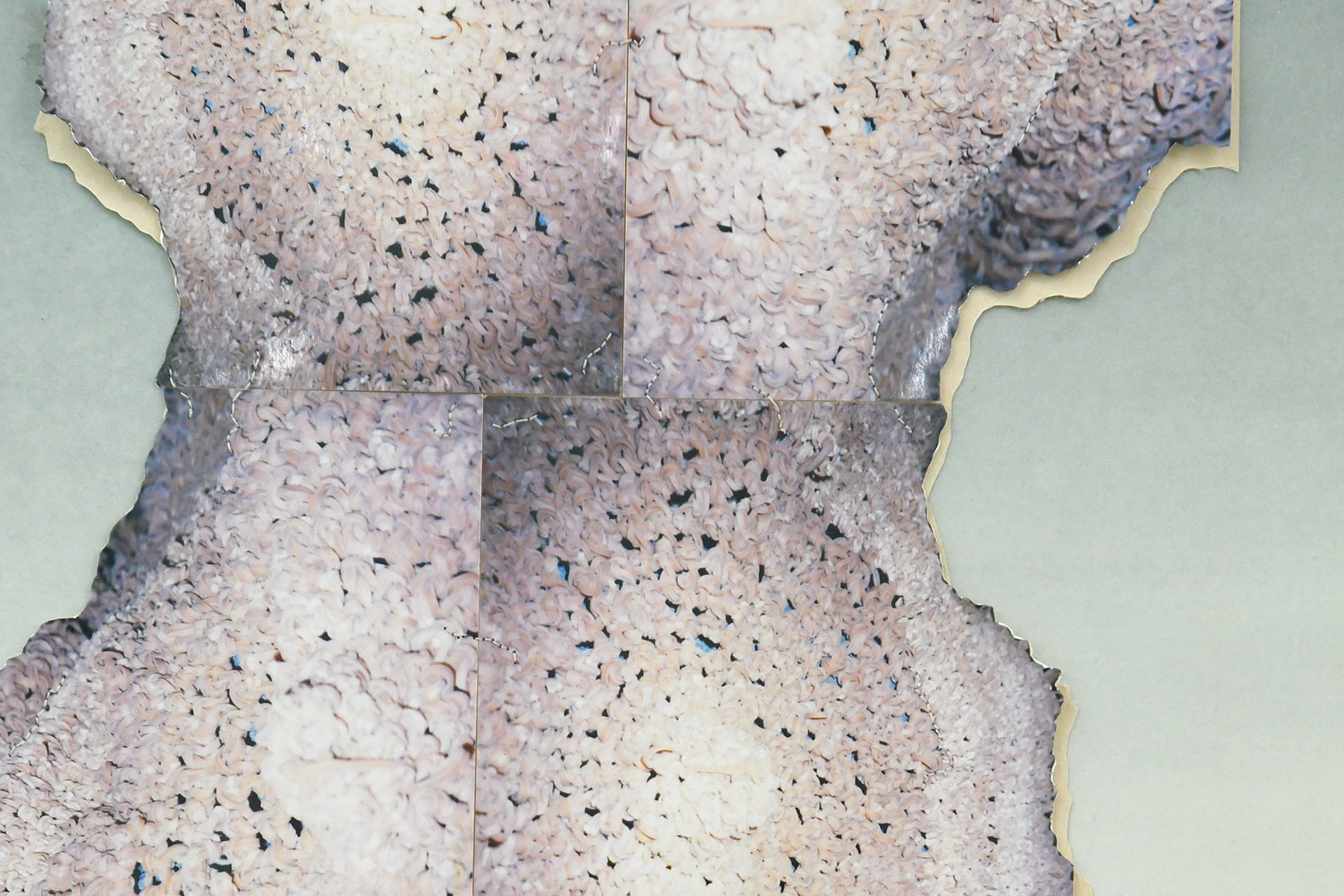
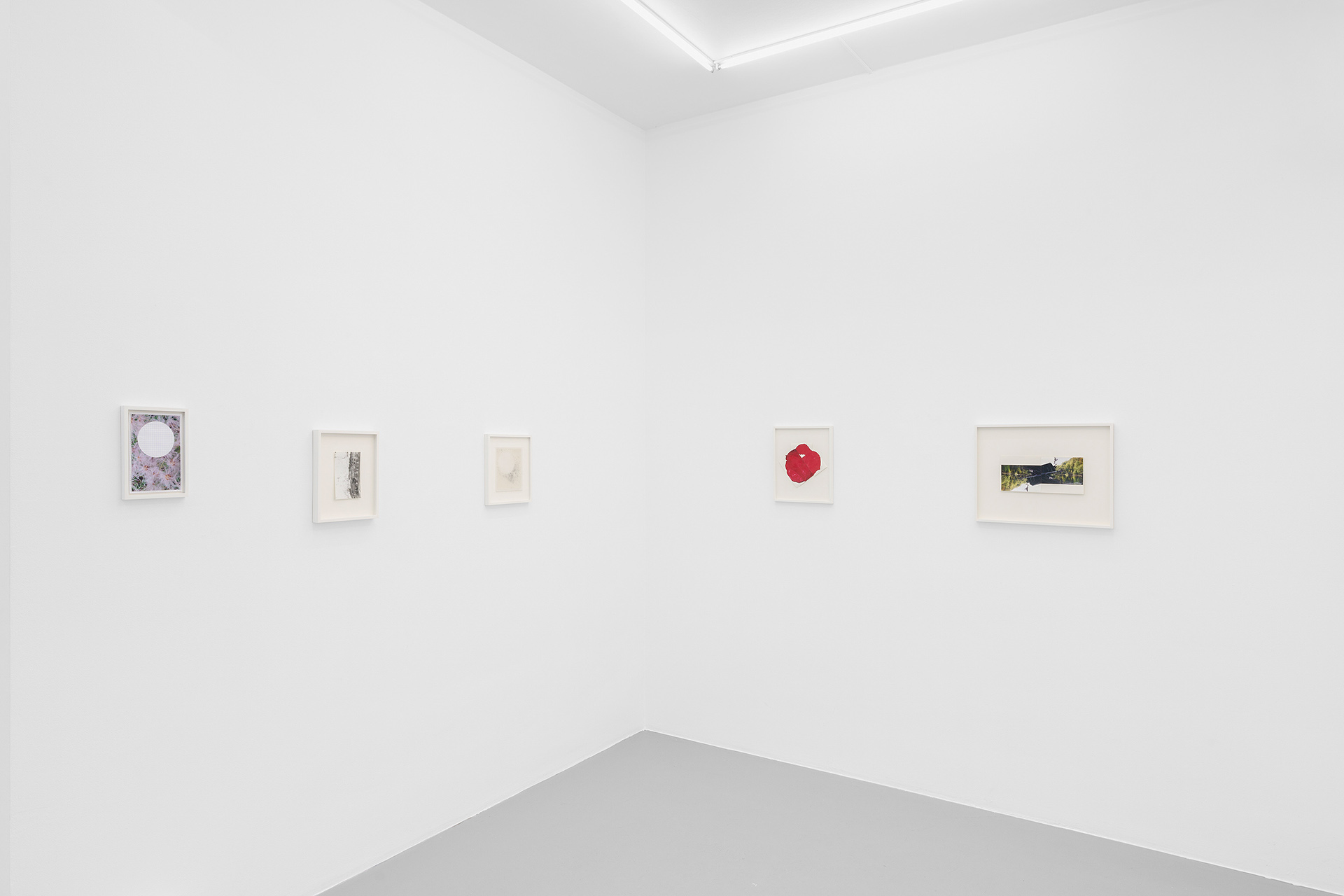
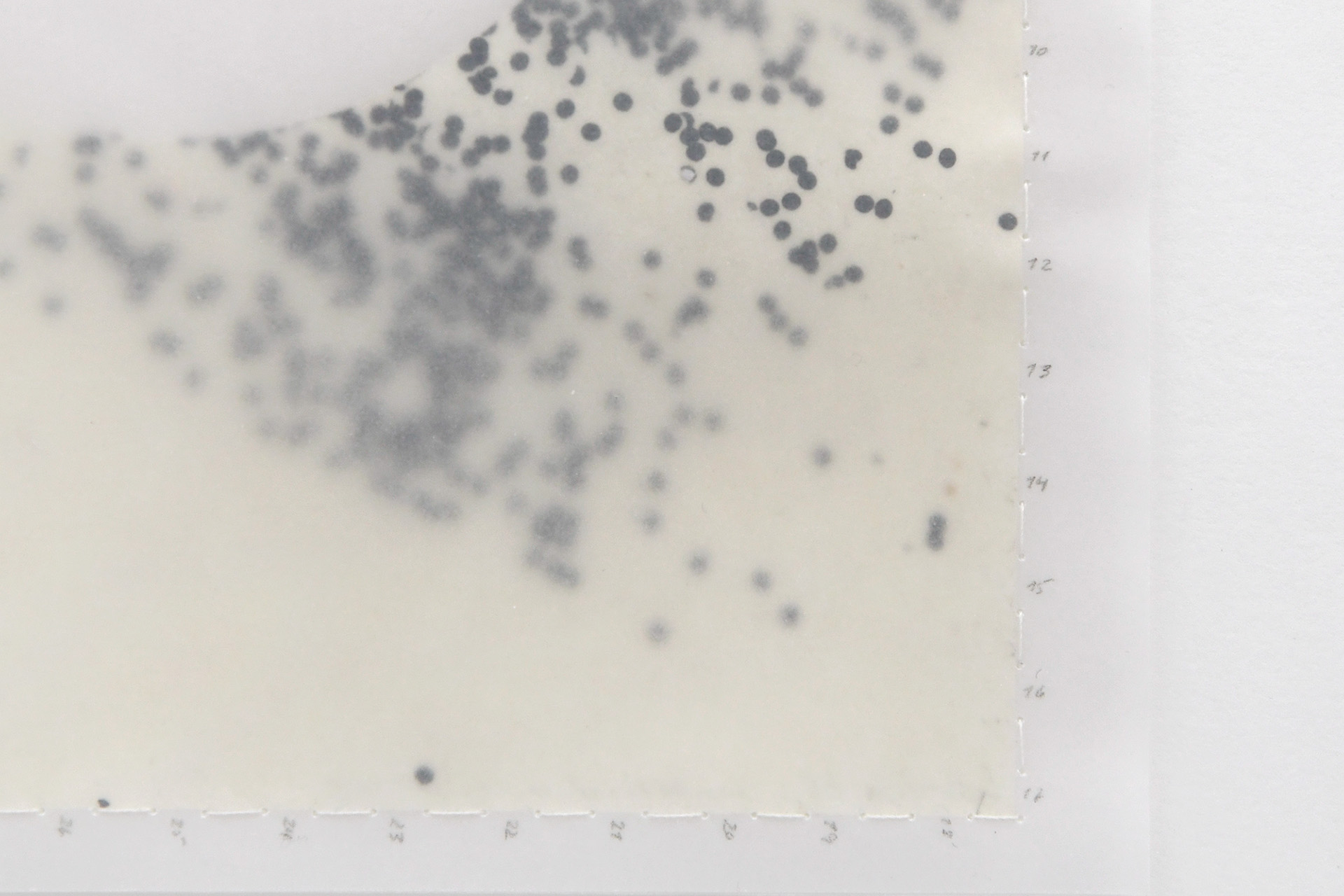
Her use of photography started in the 1990s, notably through the recording of various actions carried out by the artist during her postgraduate year at HISK in Ghent. Initially conceived as documentary evidence, several of these images were later incorporated into mural compositions or presented in display cases, generally in the form of fragments manipulated and reworked by the artist in accordance with her unique graphic vocabulary. Guðný Rósa Ingimarsdóttir thus starts with existing photographs— analog prints, subjected to various reprinting operations, taken from her own work documentation or her research on nature and landscape—but the images used only very rarely correspond to the original shot. Cut, partially or completely peeled with a scalpel, turned inside out, stitched or layered, each selected fragment undergoes a series of modifications intended either to reveal possible buried layers or to highlight the beauty of the material by breaking it down to its most fragile state. Like the camera, the scalpel is essential in the artist’s studio. It acts as a drawing tool, producing shapes by subtraction rather than addition. Some of her interventions are almost imperceptible: from a distance, the eye hesitates between photographic image and drawn lines; up close, the (im)precision of the gesture is revealed. Under the artist’s fingers, photography thus becomes a layered material, endowed with an almost sculptural dimension, where the front and back acquire equal value.
The boundaries between photography and drawing are constantly blurring. The forms that Guðný Rósa draws are mainly derived from photographic images, which themselves originate from artistic production, placing the whole within the same continuum. The artist claims this ambiguity as a space of fertile tension where the lines, figures, and patterns that emerge circulate freely from one medium to another. This is particularly true because, even when a work appears to be finalized because it is fixed in a frame, its immutability remains reversible. The stitches can be removed, the composition reworked, relocated, or reused elsewhere. This is how the works travel from one exhibition to another. A solid form may appear in one place, while its hollowed-out counterform is shown elsewhere. In a similar vein, certain photographs taken at a given moment may reappear several decades later in a recent installation or undergo multiple formal variations throughout their existence due to their infinite reproducibility.
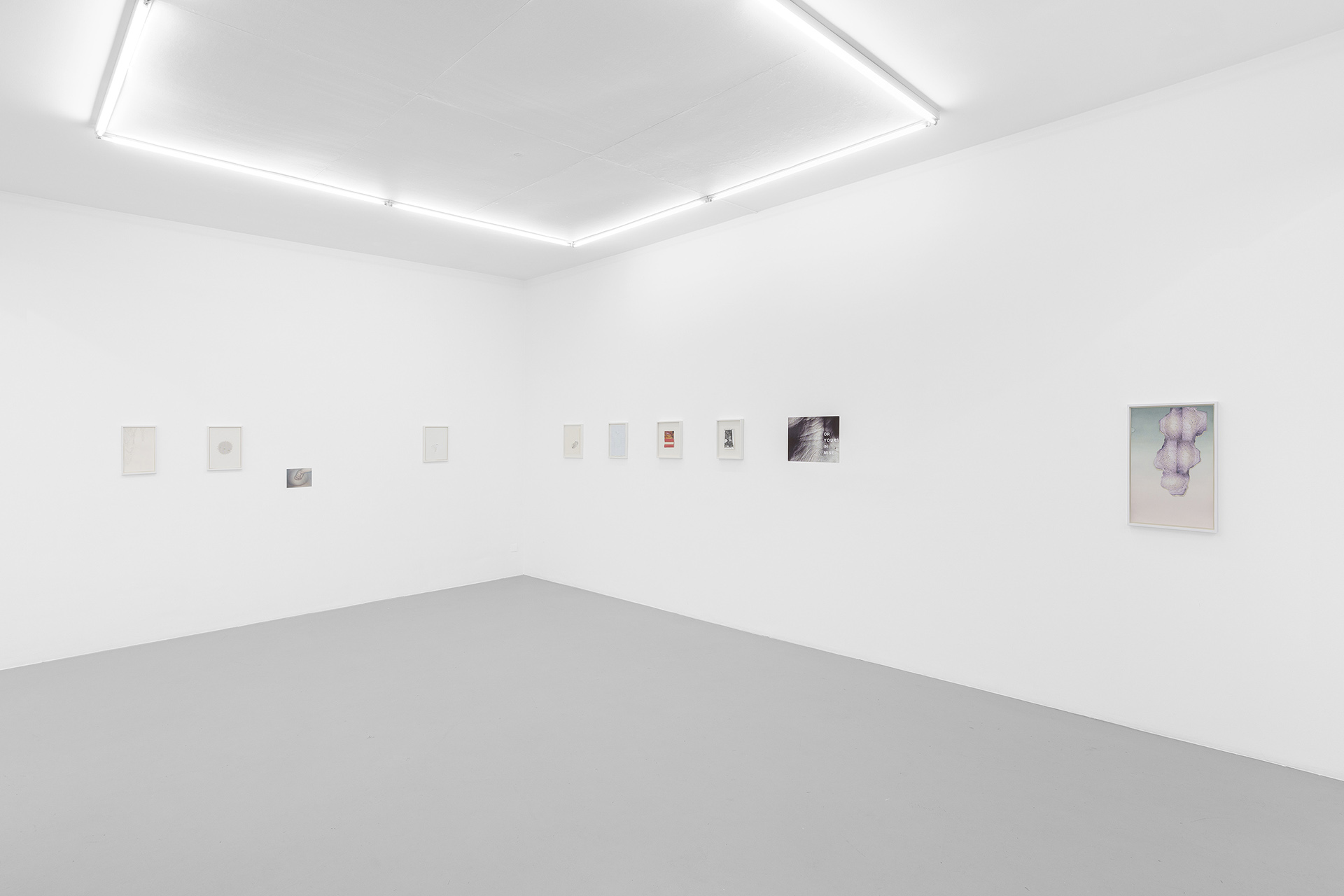
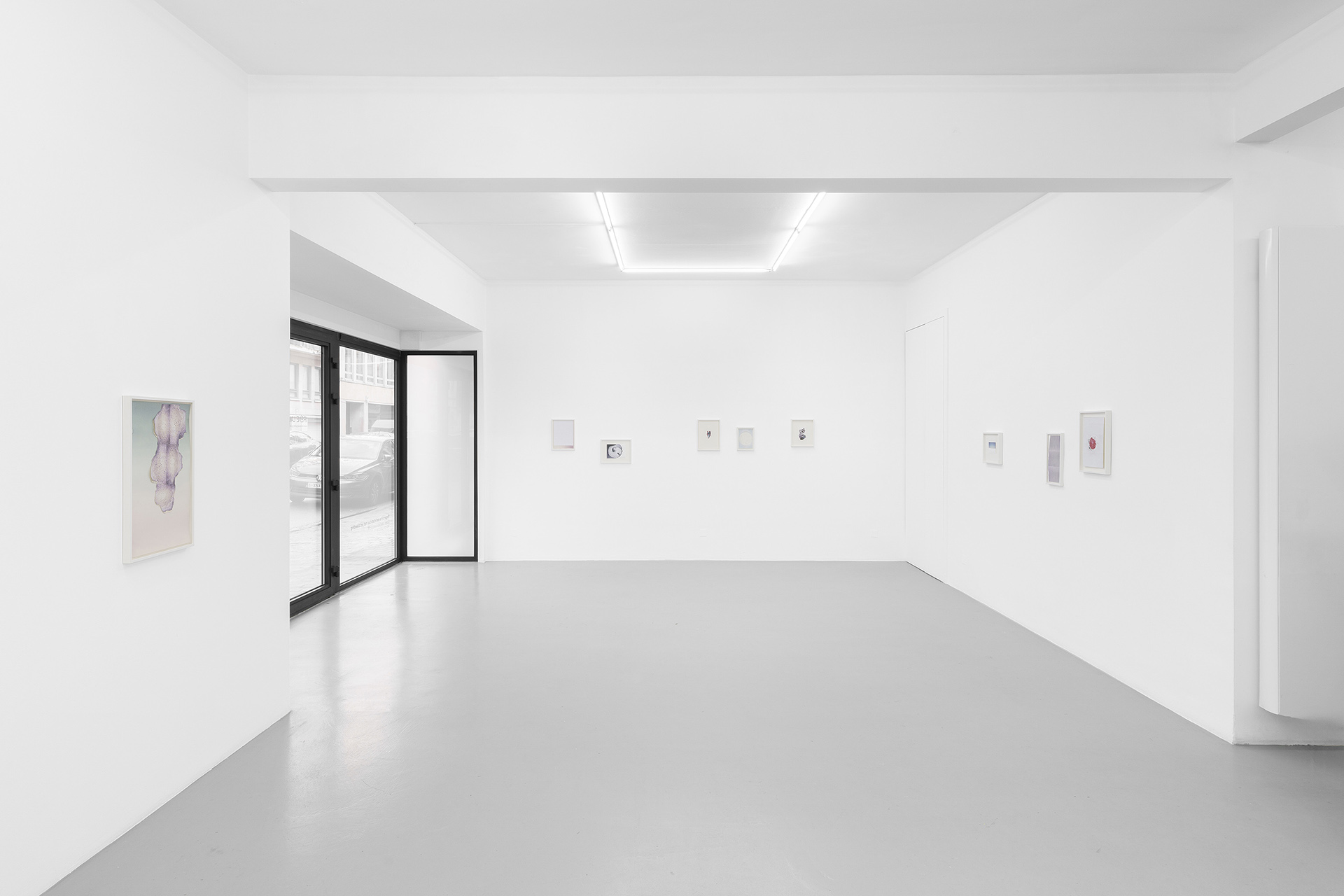
It is clear that Guðný Rósa Ingimarsdóttir’s work does not follow a linear, productive approach based on any attempt at completion. On the contrary, it remains eternally open to transformation, reactivation, or even disappearance, according to a modus operandi that arises from ante-predicative interventions carried out within a vast laboratory of diverse forms and materials, created and collected, but carefully preserved throughout her life as a woman, mother, and artist. Photography, just like sewing, writing, drawing, or peeling—other techniques dear to the artist—is considered as one material among others, capable of being manipulated, altered, and reinvested according to moods and contexts. This cyclical process relies on an internal memory of the work, known only to the artist, because, according to her, communicating too much information about the creative process could alter how it is received. Asserting the right of the work to exist independently of the artist’s intention, Guðný Rósa Ingimarsdóttir likes to favor displays that invite a physical encounter, thus allowing access to the density of details they contain. Like poetry, her work requires a certain slowness and inner availability to be fully understood, which does not prevent it from being overlooked and giving rise to possible misunderstandings or misinterpretations if viewed with a hurried or distracted eye. Viewing from a distance or up close thus involves two distinct and non-hierarchical experiences, which the artist accepts as part of the unique experience of each visitor.
For her part, she has deliberately, and for a long time, chosen to devote herself to slow, repetitive manual gestures that engage her body and mind over time, completely contrary to the logic imposed by the frantic race for technological progress; a practice that she feels she needs to slow down even further to be in tune with her internal mechanics.
– Clémentine Davin
This exhibition is part of the 10th edition of the PhotoBrussels festival.


Opening Thursday 15.01.26, 5pm > 9pm
Exhibition until Saturday 28.02
Location
Irène Laub gallery
29 rue Van Eyck
1050 Brussels (BE)
Read more about Guðný Rósa Ingimarsdóttir.