ANGLES
Michèle Magema
In 2020, KADOC, meemoo (the Flemish Institute for Archives) and CINEMATEK (the Royal Belgian Film Archive), with the support of the Flemish Community, concluded the restoration and digitization of the film collection of the Missionaries of Africa (White Fathers). From a total of 954 preserved objects (sound, image, combined reels) eighty films could be reassembled. Most of them belong to the genre of so-called mission films and are mainly shot in the present-day Democratic Republic of Congo, Rwanda and Burundi between 1946 and 1967. They are a remarkable exponent of post-war Belgian colonial film and were recognised as Flemish masterpieces in 2010.
The film collection is the starting point for ANGLES, an artistic heritage project in the framework of the Global Minds program of VLIR-UOS supported by the Interfaculty Council for Development Cooperation of KU Leuven. The project aims to encourage critical reflection on the (audiovisual) heritage of missions in colonial contexts. Three artists were invited to enter into dialogue with the film collection and to create new artworks: Congolese-French multimedia artist Michèle Magema, photographer and installation artist Yves Sambu from Kinshasa and painter and sculptor Daddy Tshikaya from Lubumbashi. During this spring, these three artists were hosted by KADOC as artists in residence. Their artworks will be on display in the chapel of KADOC from June 17th to August 14th.
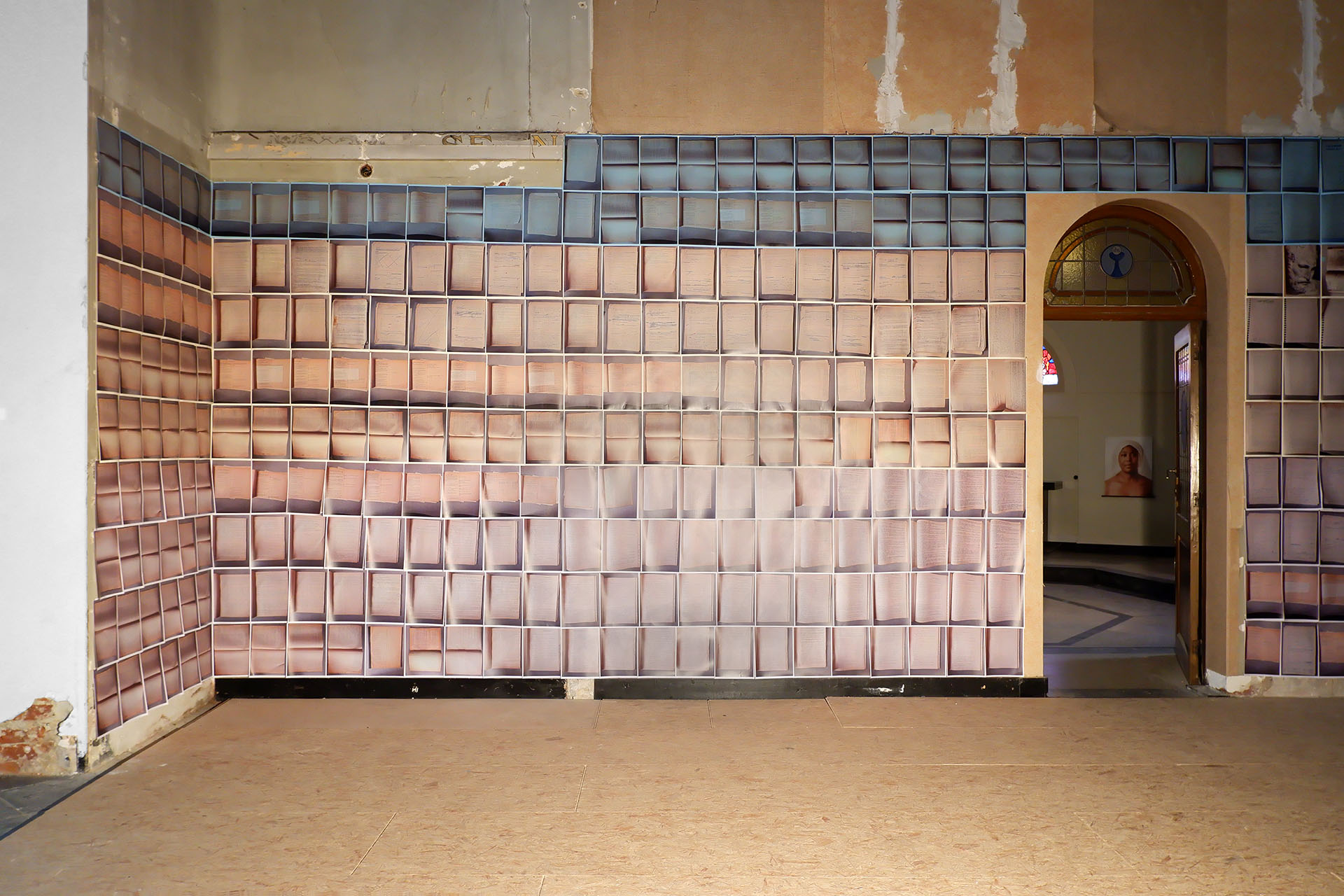
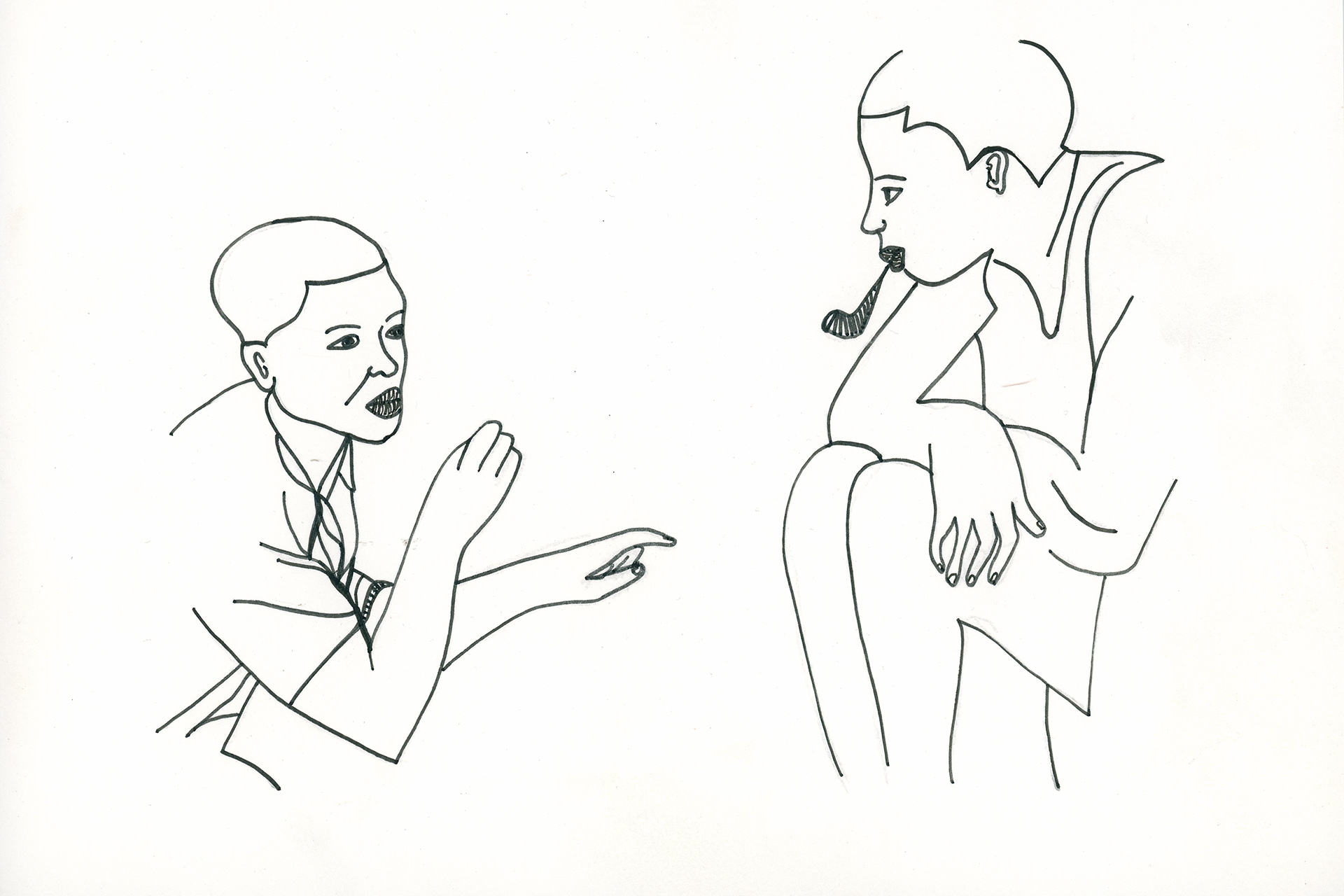
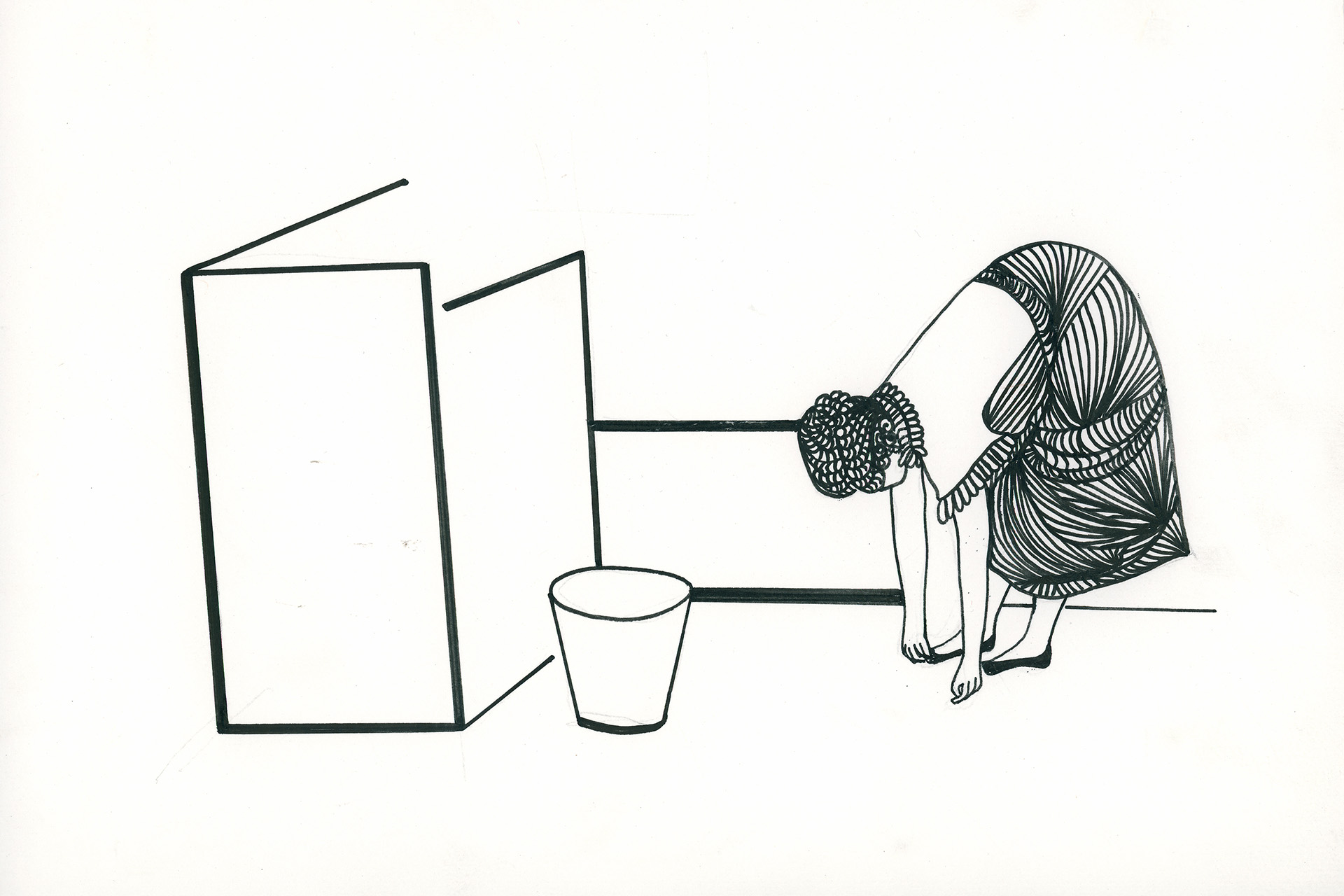
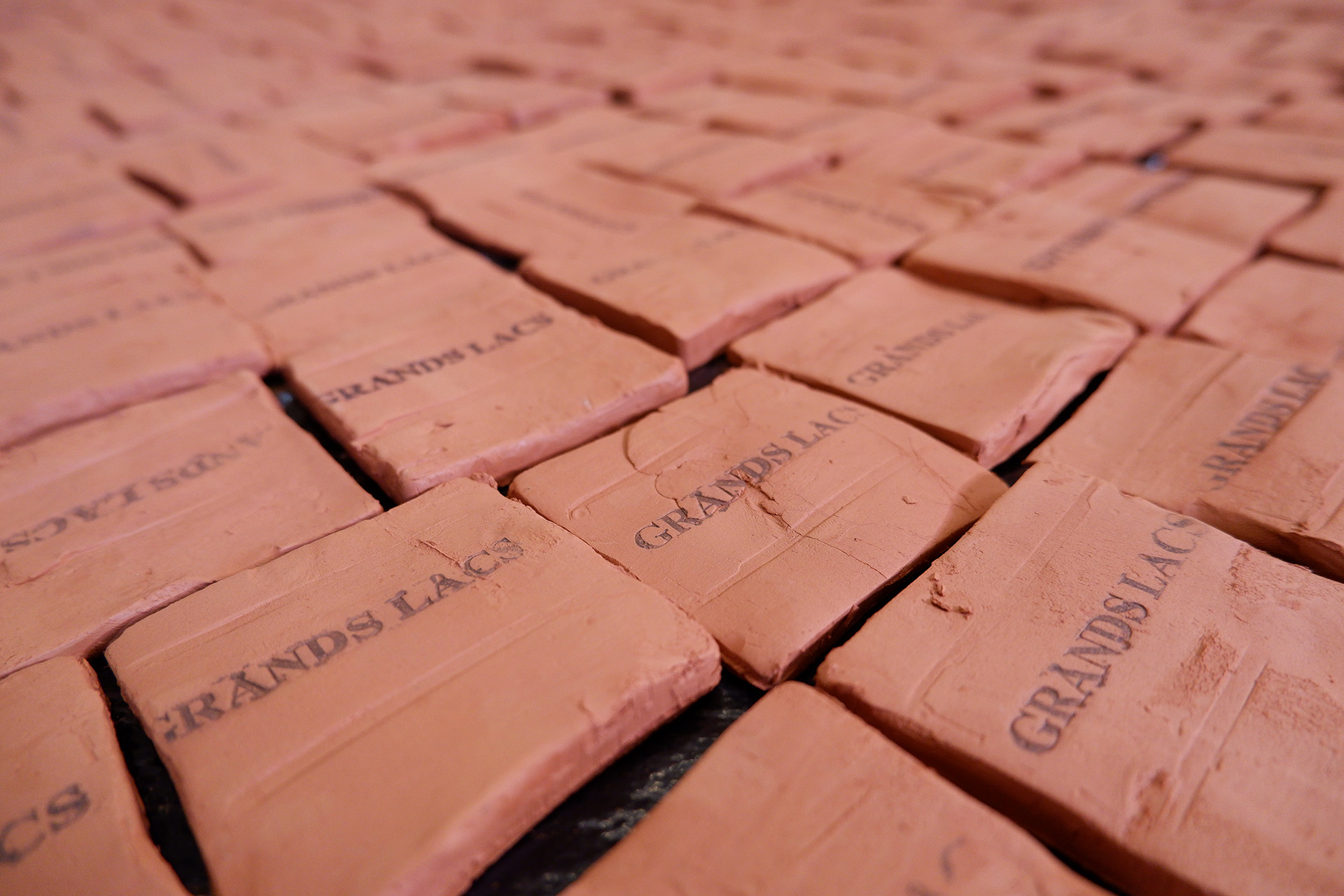
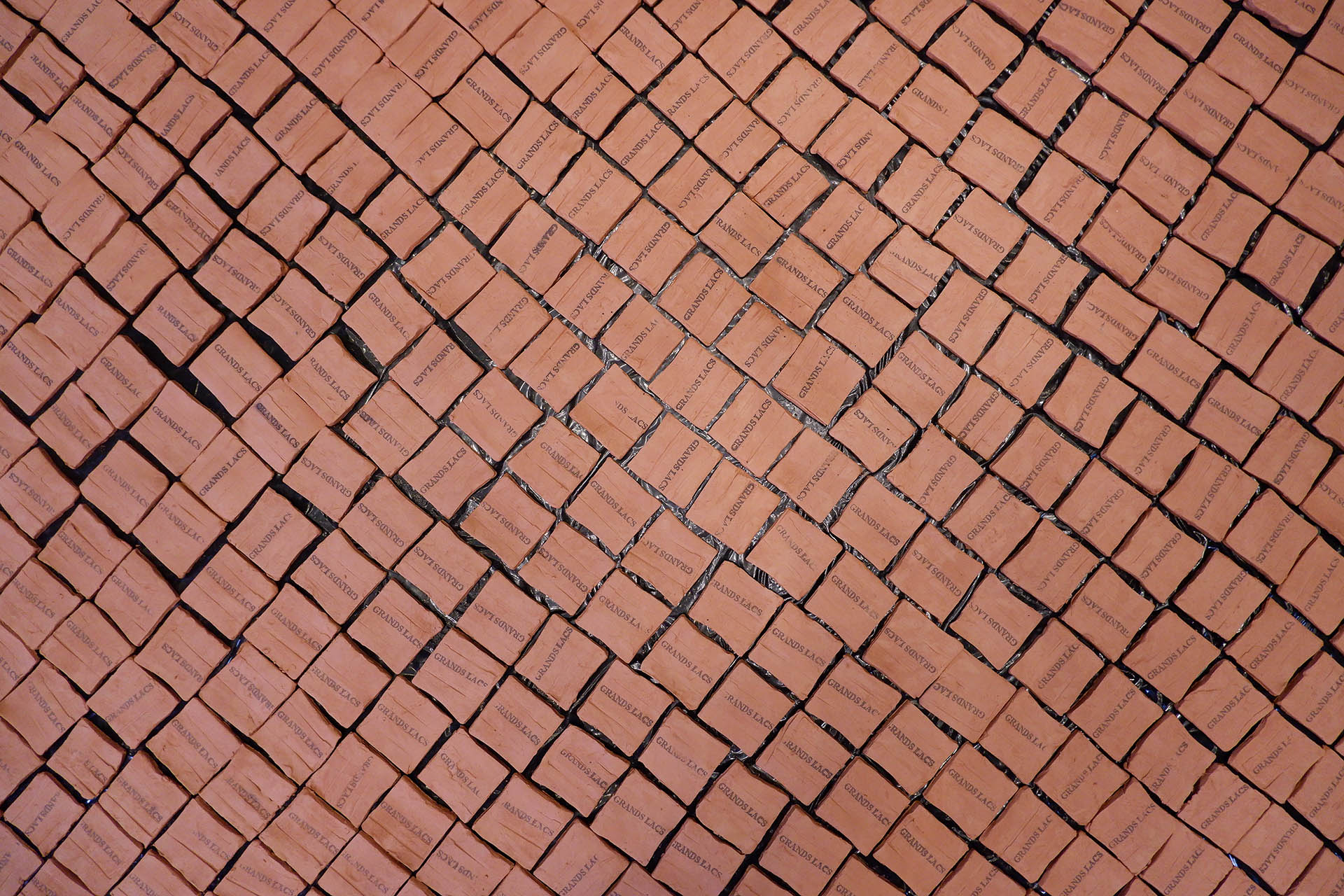
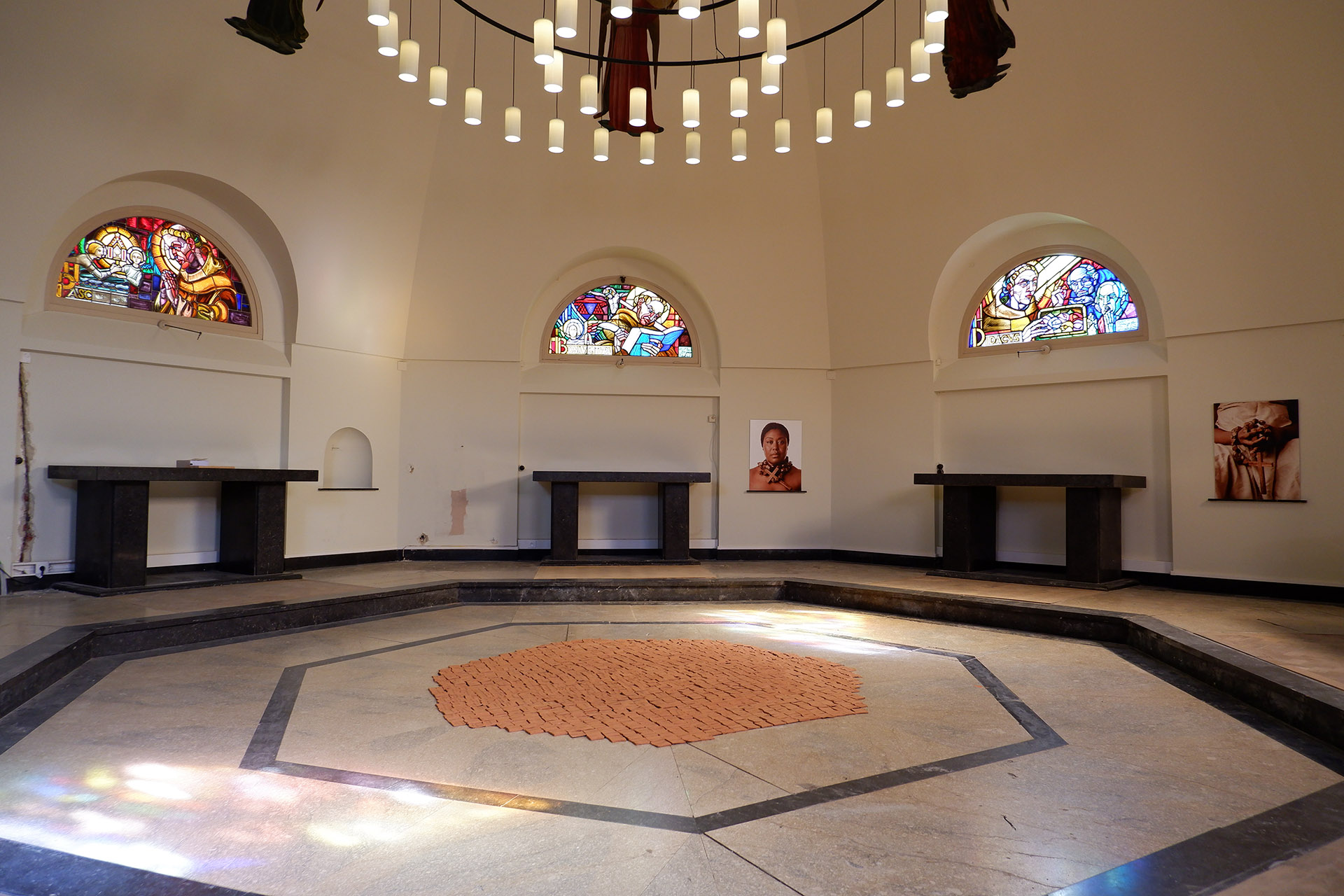
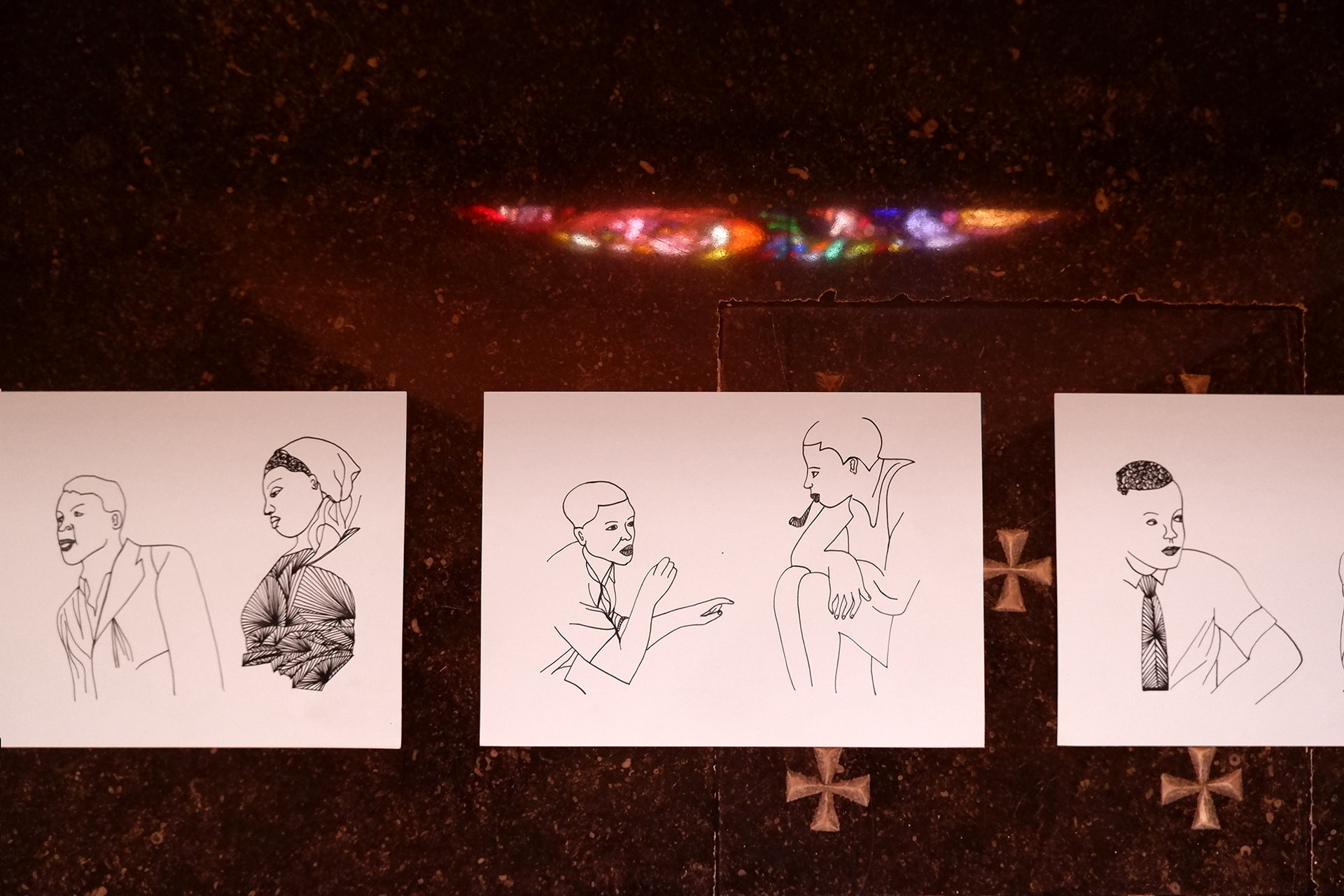
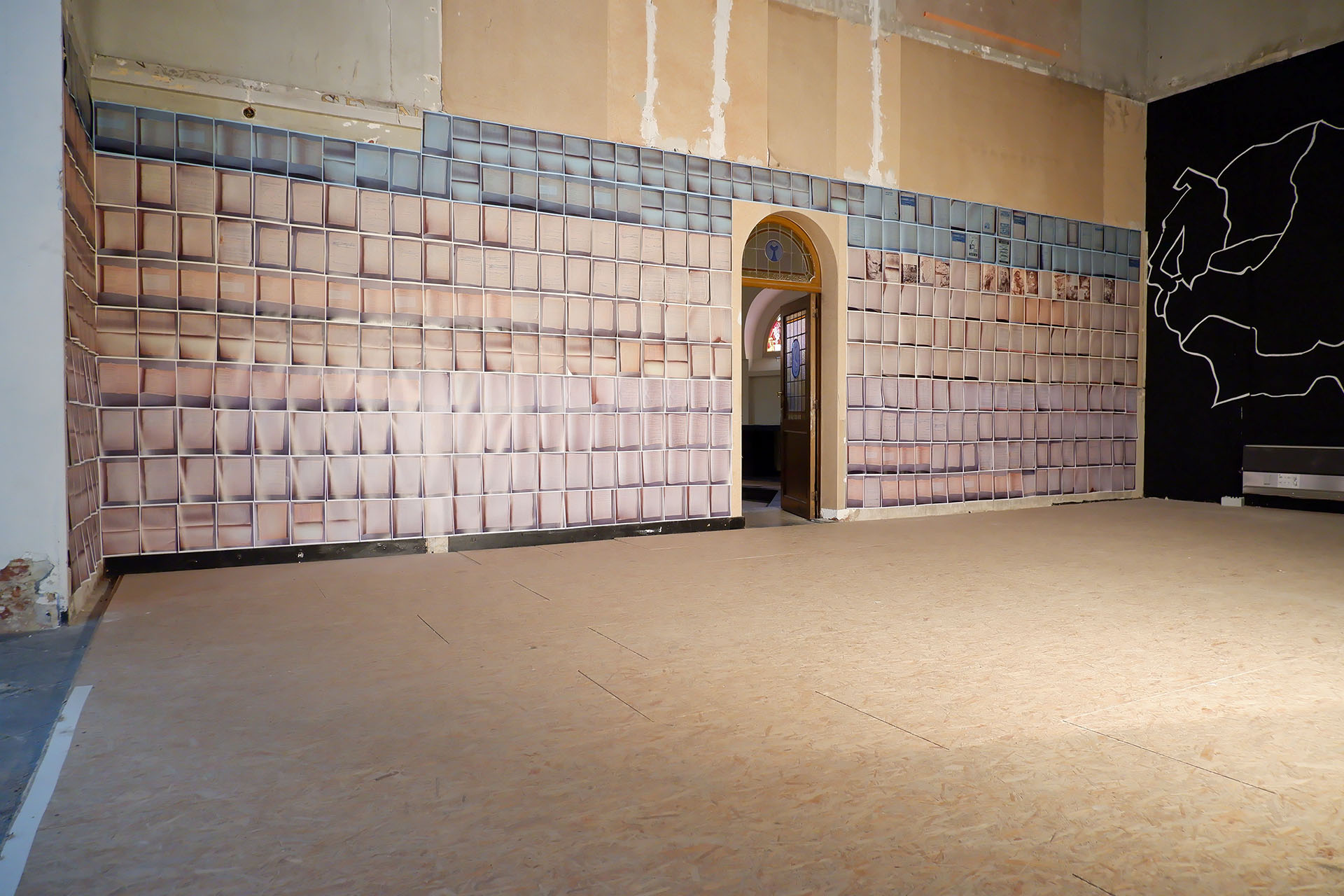
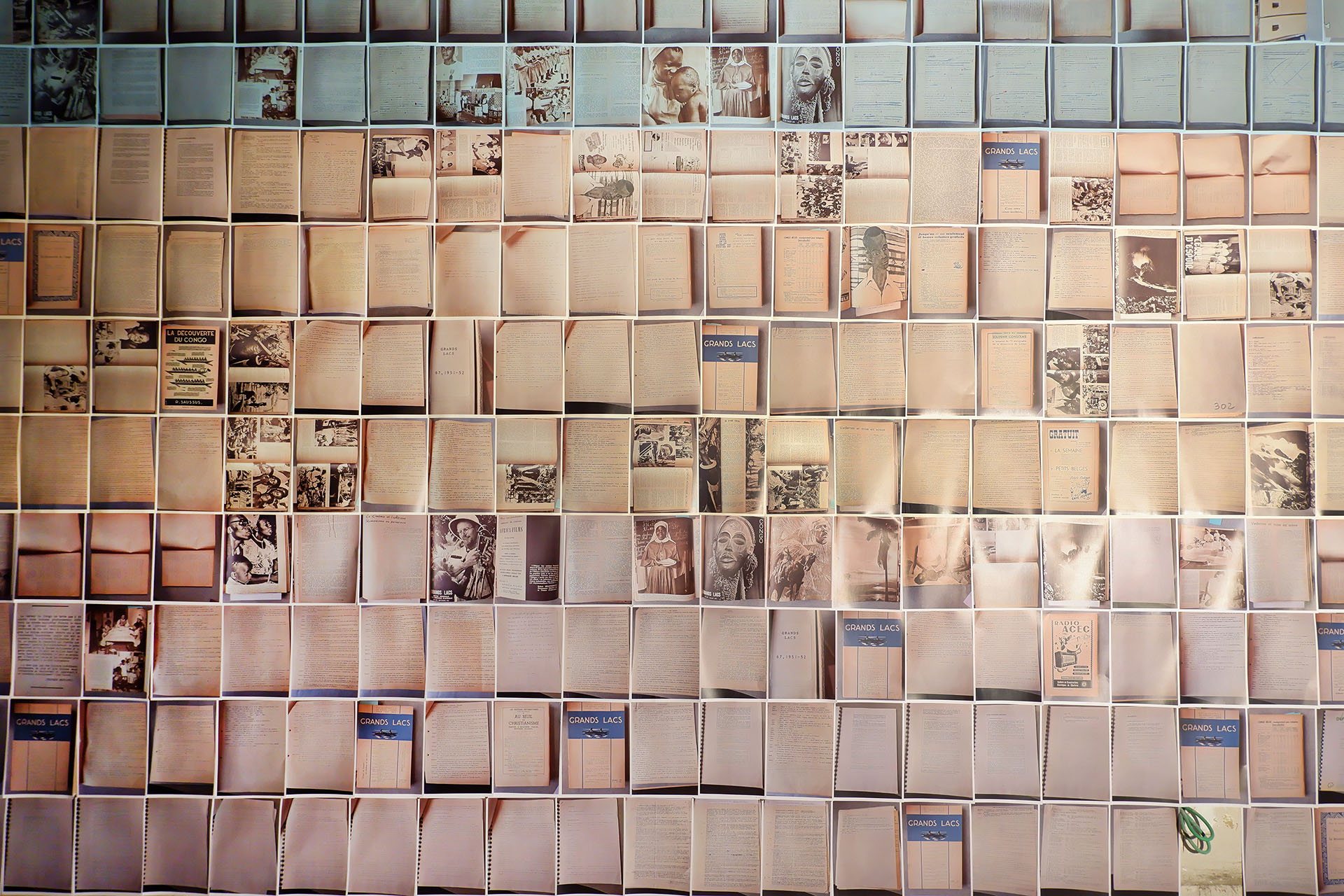
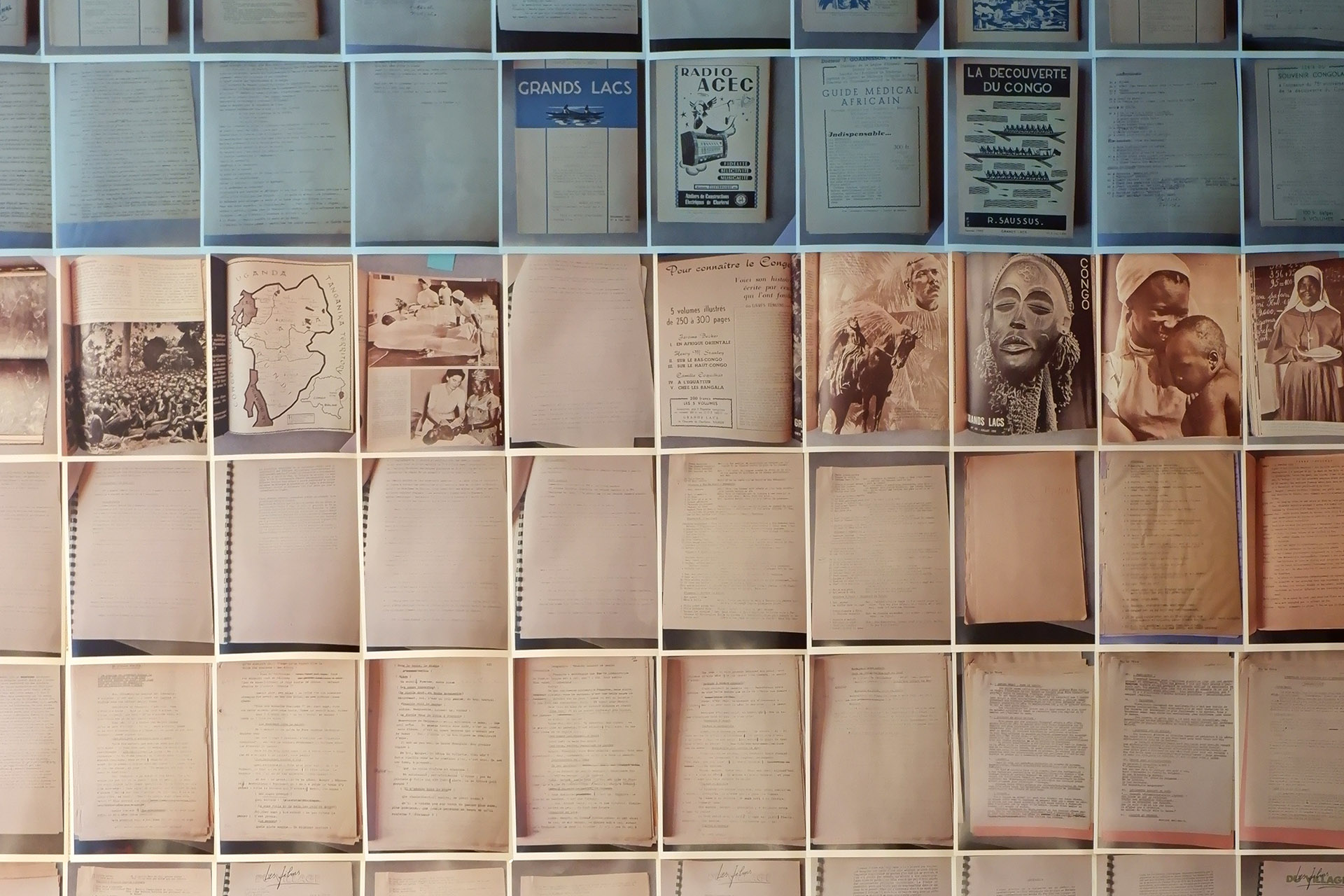
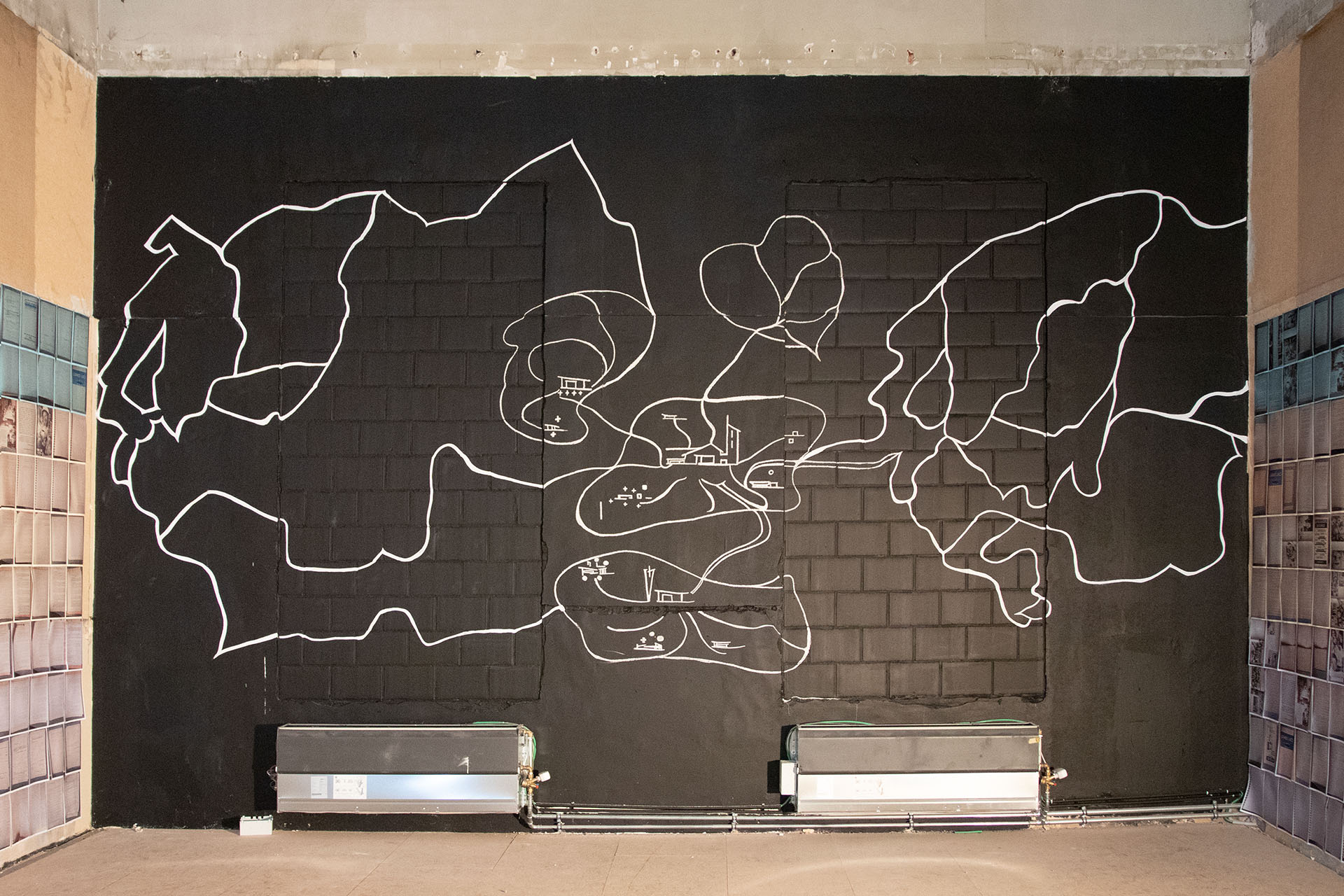
Carré Noir sur fond Blanc by Michèle Magema is a mixed installation composed of drawings, prints, photo- copies, photographs, woodcuts, copper plate, print work, sound and clay. Each object is linked to another, and together constitute a heterogeneous in situ installation. Michèle Magema’s central starting point are the scenarios of the films produced by the White Fathers. In them, she investigates the way Congolese bodies have been confined in the paternalistic gaze of missionaries who evangelised for the benefit of the colonial plan.
The consultation of the films and their scenarios has led the artist to reconsider them as the objects they really are; as tangible instruments that were deployed in the Catholic Church’s relentless proselytising and Belgian colonial propaganda, and helped sustain the colonial dominant-dominated relationship. The Congolese could be affected, even hypnotized by the films and the operations of the cinematic device.
Magema chose to stage various elements that each function as references to the mis- sionary context in which Congolese objects (statutes, fetishes, sacred objects etc.) were removed and demolished. The destruction of these objects testified to a revisionist attitude of the Catholic Church towards the religious practices of the Congolese. For the artist, their films confirmed the success of this undertaking, as the void left by the disappearance of Congolese religious objects was subsequently filled by introducing religious objects through the missions (bibles, crucifixes, rosaries, vestments, incense, candles etc.).
The artist considers each film as an ‘object-document’. Elements such as the title, voice-over, framing, dialogue, lighting, direction, and scenarios all formally contrib- uted to justifying the educational value of this type of cinema. These films are not ethnological in their aesthetics. They were primarily used as functional tools for systemic conversions, enabling the establishment of an authority based on the divine, and the creation of a relationship between the dominant (the missionaries) and the dominated (the Congolese to be converted).
For this installation Magema produced new forms that each evoke this complex relationship between ‘sacred’ and ‘profane’ objects, the hierarchical relation between the White Fathers and the Congolese, and the extraction of raw materials in the name of God, bible in hand. The blank book is reminiscent of the Bible, the materials used sym- bolise the natural resources of Congo, in reference to the film Bâtisseurs that exposes the exploitation of minerals by the Belgian colonizer.
Magema displays her gradual process of exploring these archives. She had to appropriate the documents and to integrate them into her creative process in order to establish a link between the past and the present. She describes this research as a process that involves different succesive acties and affections: confrontation, careful reading, analysis, rejection, distance, proximity, ingestion, processing and restitution. As an Afro-descendant person, working with colonial archives requires a slow process allows her to profoundly question her own genealogy. About her relationship with the archive, Magema states: ‘Once we connect with the archive images, they never leave us, as if we were carrying the memory of our ancestors, integrating all those Congolese faces frozen forever in those films. Each image imposes itself in our memory, to take place forever in our deepest intimacy.
More information about Michèle Magema